
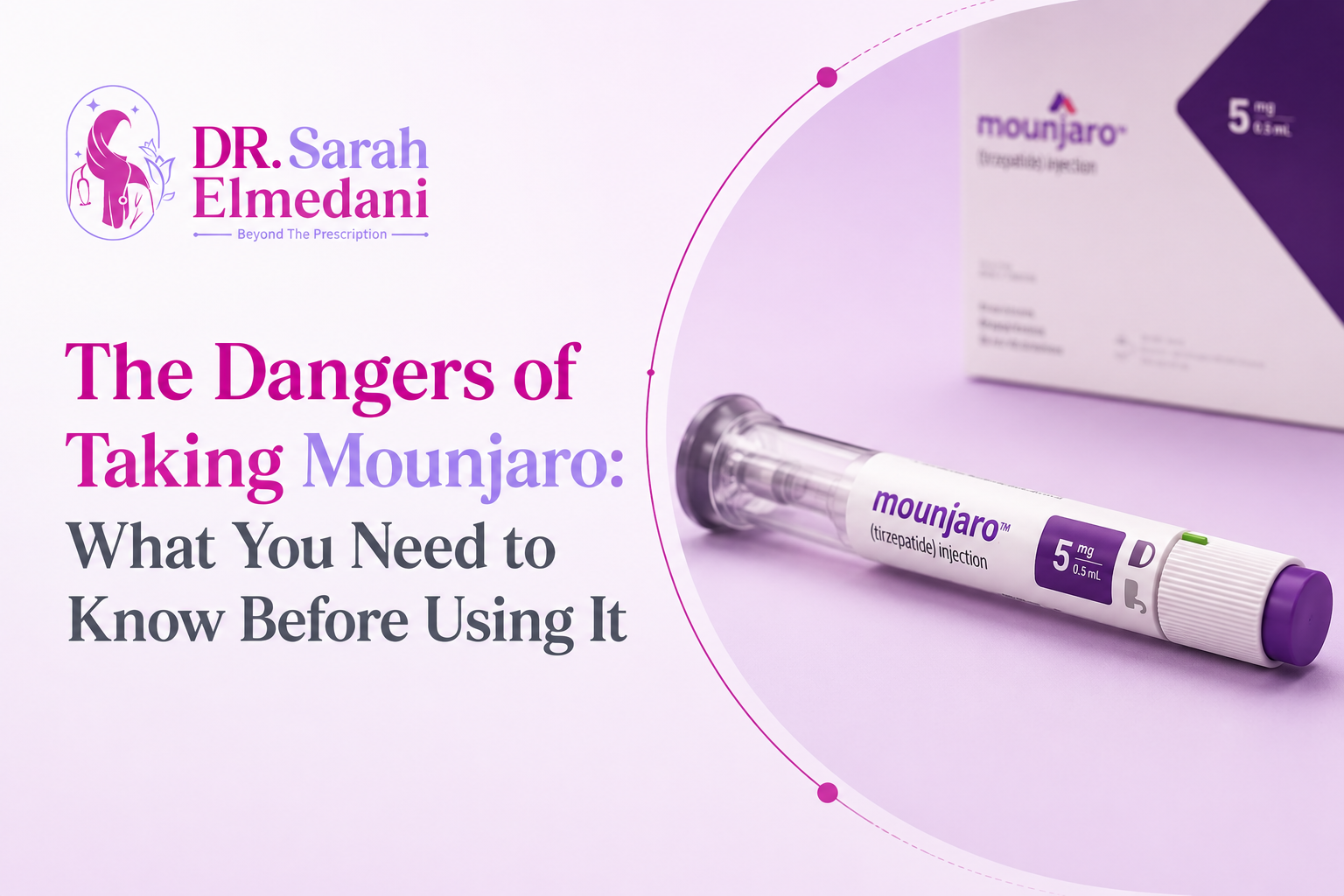
The Dangers of Taking Mounjaro: What You Need to Know Before Using It
Mounjaro (tirzepatide) has gained significant attention as a medication for managing type 2 diabetes and, in some countries and under specific brand indications, chronic weight management. Its effectiveness has made it increasingly popular, but like any prescription medication, it is not suitable for everyone and should not be used without medical supervision
So understanding the potential risks and side effects is essential before starting it .
What Is Mounjaro?
Mounjaro contains tirzepatide, a medication that works on two hormone receptors involved in blood sugar regulation and appetite. It can help improve blood glucose control and reduce appetite, which may lead to significant weight loss.
However, its effectiveness can sometimes lead people to view it simply as a “weight-loss injection,” overlooking the fact that it is a powerful prescription medication that requires appropriate evaluation and monitoring.
Common Side Effects of Mounjaro
The most frequently reported side effects are related to the digestive system. They may include:
- Nausea
- Vomiting
- Diarrhea
- Constipation
- Abdominal discomfort
- Decreased appetite
- Indigestion
These symptoms are often more noticeable when treatment is started or when the dose is increased. For many people, they improve over time, but persistent or severe symptoms should not be ignored.
When Can Mounjaro Become Dangerous?
Although serious complications are uncommon, some risks require medical attention.
1. Severe Gastrointestinal Problems
Because tirzepatide slows stomach emptying, it can cause significant gastrointestinal symptoms in some people. Severe or persistent vomiting and diarrhea can also lead to dehydration, which may contribute to kidney problems..
2. Pancreatitis
Inflammation of the pancreas, known as pancreatitis, has been reported with medicines in this class. Severe, persistent abdominal pain,particularly pain that may radiate toward the back,requires prompt medical evaluation.
3. Gallbladder Problems
Rapid weight loss and treatment with tirzepatide may be associated with gallbladder problems, including gallstones and inflammation of the gallbladder.
Symptoms such as persistent pain in the upper abdomen, fever, jaundice, or unusual digestive symptoms should be medically evaluated.
4. Low Blood Sugar
Mounjaro itself does not usually cause hypoglycemia when used alone. However, the risk can increase when it is combined with other diabetes medications, particularly insulin or sulfonylureas.
5. Allergic Reactions
As with any medication, serious allergic reactions are possible. Swelling of the face, lips, tongue, or throat, difficulty breathing, or severe rash requires immediate medical attention.
Who Should Be Especially Careful?
Mounjaro may not be appropriate for everyone. Before starting treatment, your doctor should know about your medical history, current medications, and any previous reactions to similar medications.
People with certain medical conditions or a personal or family history of medullary thyroid carcinoma (MTC) or Multiple Endocrine Neoplasia syndrome type 2 (MEN 2) require particular consideration because of the medication’s boxed warning regarding thyroid C-cell tumors observed in animal studies.
Don’t Take Mounjaro Without Medical Supervision
One of the biggest problems surrounding Mounjaro is its growing popularity on social media. Some people may attempt to obtain it without proper medical assessment, use doses intended for someone else, or increase the dose faster than recommended because they want quicker weight loss.
More medication does not mean faster or safer results.
The appropriate dose depends on the individual, their response to treatment, and their medical circumstances. Using Mounjaro incorrectly can increase the likelihood of adverse effects.
The Bottom Line
Mounjaro can be an effective medication for appropriate patients, but it is not a harmless weight-loss shortcut. Like any prescription treatment, it has potential side effects and risks that should be considered before starting therapy.
Frequently Asked Questions :
1. Is Mounjaro dangerous?
Mounjaro can be safe and effective when prescribed to the right patient and used under medical supervision. However, it can cause side effects and, in rare cases, serious complications. Its safety depends on factors such as your health condition, dosage, other medications, and medical history.
2. What are the most common side effects of Mounjaro?
The most common side effects include nausea, vomiting, diarrhea, constipation, abdominal discomfort, indigestion, and decreased appetite. These symptoms may be more noticeable when starting treatment or increasing the dose.
3. Can Mounjaro cause pancreatitis?
Pancreatitis has been reported in patients taking medications in this class. Severe or persistent abdominal pain, especially if it spreads to the back and is accompanied by vomiting, should be evaluated by a doctor promptly.
4. Can Mounjaro cause low blood sugar?
Mounjaro can increase the risk of hypoglycemia, particularly when used alongside insulin or sulfonylurea medications. Your doctor may need to adjust other diabetes medications to reduce this risk.
5. Can I take Mounjaro without a prescription?
Mounjaro is a prescription medication and should only be used following an appropriate medical assessment. Taking it without professional guidance can expose you to unnecessary risks and inappropriate dosing.
6. Is Mounjaro suitable for everyone who wants to lose weight?
No. Mounjaro is not appropriate for everyone. A healthcare professional should assess your medical history, current medications, weight-related health conditions, and potential contraindications before recommending treatment.
7. Is Mounjaro a quick and harmless weight-loss solution?
No. Although Mounjaro can contribute to significant weight loss in appropriate patients, it is a prescription medication with potential risks and side effects, not a cosmetic or quick-fix treatment. It should be used as part of a medically supervised weight-management plan.
Dr. Sarah Medani, Internal Medicine Physician in the USA, is dedicated to helping patients better understand their health and make informed decisions about their treatment. With expertise in internal medicine and comprehensive adult healthcare, Dr. Sarah takes a patient centered approach focused on prevention, accurate diagnosis, and individualized treatment plans.
If you have concerns about Mounjaro, weight management, diabetes, or any other health condition. Book your appointment with Dr. Sarah Medani today and take the first step toward better, more informed healthcare.